Blood pressure at home: what the second number means
The number you write down at the kitchen table is not the number we take in clinic — and that is fine, as long as you know which one your doctor is treating.

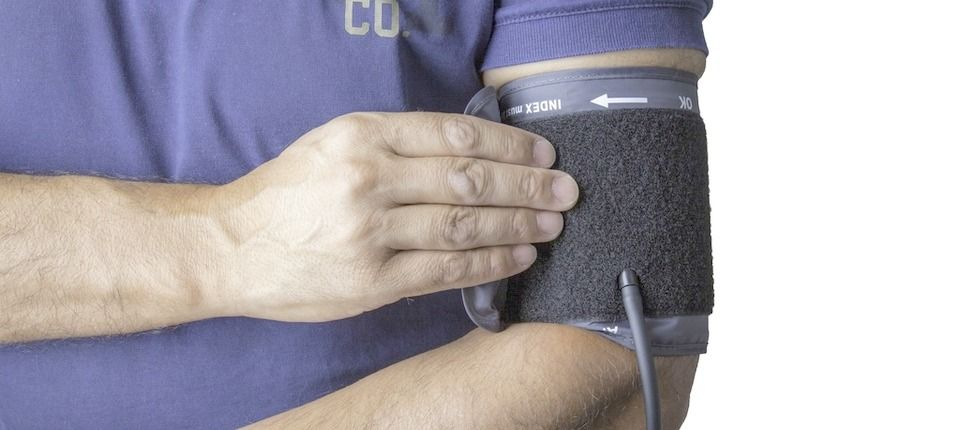
Why two readings differ
Almost everyone reads higher the first time. The cuff is unfamiliar, you have just walked in from the car, and the act of being measured raises the number by five to ten points on its own. This is consistent enough that we build it into the process: three readings a minute apart, and the first is discarded before anything is written down.
At home the effect is smaller but it does not disappear. If you sit down, roll up a sleeve and take a reading straight away, you are measuring the arrival as much as the blood pressure. Five minutes of sitting still before the cuff goes on is the single change that makes a home log worth reading.
The other half of the gap is real variation. Blood pressure moves through the day — lowest in the small hours, highest mid-morning, up again after coffee, food, cold, a full bladder or a difficult phone call. One number is a snapshot of one moment. A week of them is a pattern, and the pattern is what gets treated.
A single reading is a snapshot. A week of them is a diagnosis.
What the second number actually is
The top number, systolic, is the pressure while the heart is pushing. The lower one, diastolic, is the pressure left in the arteries while the heart refills — the floor your circulation never drops below. It gets less attention than it deserves. In people under about fifty a raised diastolic is often the first thing to appear, sometimes years before the systolic moves at all.
What counts as raised depends on where it was measured. Home readings run lower than clinic readings, so the thresholds are lower too: 135/85 at home is roughly the same finding as 140/90 in the room. If you bring us a log, tell us which monitor and which arm, and we will read it against the right line.
Measuring properly at home
Sit for five minutes with your back supported and both feet on the floor. Rest the arm on a table so the cuff sits level with your heart. Do not talk. Take two readings a minute apart and write both down, morning and evening, for seven days — the first day is usually the worst and we ignore it.
Use an upper-arm monitor rather than a wrist one, and bring it in once so we can check it against ours. A monitor that is two years old and has never been compared to anything is a monitor that might be reading eight points off in either direction.
When to call us, and when not to
One high reading is not an emergency and is not worth a phone call. A week of readings averaging above 135/85 is worth an appointment, but a routine one.
What is worth calling about is a reading above 180/120 that stays there when you repeat it after five minutes of rest, or any reading at all that arrives with chest pain, sudden breathlessness, weakness on one side, difficulty speaking or a change in vision. Those are not blood pressure questions any more, and they belong with urgent care or an ambulance rather than with a log.
What we do with your log
We average it, discard the first day, and compare it against your last set. Most of what we are looking for is direction rather than a single value: whether a change six months ago did anything, whether the mornings are consistently worse than the evenings, whether a number that looked alarming in the room looks ordinary at home.
Bring the log to your appointment, on paper or in the portal. Two readings a day for seven days is plenty — morning before medication, evening before bed — and we would rather have seven honest days than a month of tidy ones.

Medically reviewed by Dr. Ingrid Sørensen
MD, PhD · Cardiology, Sellwood · Reviewed Aug 2, 2026
Sources
What this article is based on
8 references. Open access or available through the Multnomah County Library. Links last checked when the article was last reviewed.
- Whelton PK et al. 2017 ACC/AHA high blood pressure guideline
- J Am Coll Cardiol · 2018
- Muntner P et al. Measurement of blood pressure in humans
- Hypertension · 2019
- Stergiou GS et al. ESH practice guidelines for office and home BP
- J Hypertens · 2021
- Sheppard JP et al. Self-monitoring of blood pressure in patients
- JAMA · 2020
- Tucker KL et al. Self-monitoring and blood pressure control
- PLoS Medicine · 2017
- US Preventive Services Task Force. Screening for hypertension
- JAMA · 2021
- Franklin SS et al. White-coat and masked hypertension
- Hypertension · 2013
- NICE guideline NG136. Hypertension in adults
- NICE · 2023
Where a reference sits behind a paywall the portal links to the accepted manuscript instead. Tell us if one of these has rotted.
Request the full listKeep reading
More on heart health
Why we measure your blood pressure twice
The first reading is almost always higher than the second. That gap is not a fault in the machine or in you — it is the reason we take three and throw the first away. Here is what the numbers actually describe, and the four things that move them in the ten minutes before a cuff goes on.
Read about Why we measure your blood pressure twiceFive questions worth asking your cardiologist
What to bring to a first cardiology appointment, and what to leave. Five questions that change what happens next, from someone who answers them all week.
Read about Five questions worth asking your cardiologistExercising with a diagnosis: how hard is too hard?
After a cardiac diagnosis the question is almost never whether to exercise. It is how hard, and how you would know you had gone too far.
Read about Exercising with a diagnosis: how hard is too hard?What a same-day appointment actually gets you
Same-day slots are not a faster version of a routine appointment. They are a different appointment, built to answer one question quickly — and knowing which one you need saves you a week.
Read about What a same-day appointment actually gets you
The monthly
One email a month, from the clinic
What we published, what changed at the four clinics, and one thing worth doing this month. Written by a clinician, about 400 words, and one click to stop.